Stories you can walk through, and talk to
Martin Edström builds interactive narratives where the audience moves through a real place in 3D and can ask the story questions. Together with IVAR Studios, the Stockholm studio he co-founded in 2016, he is developing exped.earth: real scientific expeditions rebuilt as explorable 3D worlds, guided by AI characters that answer only from that expedition’s own research.
It is the latest step in more than a decade of pushing storytelling formats forward. Martin published an interactive 360-degree story from a refugee camp in 2012, directed virtual reality documentaries for National Geographic, and has spent the years since moving from 360-video into photogrammetry, WebXR and real-time 3D.
From field data to explorable worlds
The workflow started in the field. On the Uncharted Caves of Kyrgyzstan expedition in 2019, Martin led the drone team surveying around 50 km² of the Tian Shan mountains. The team made 130 drone flights, captured more than 12,500 images, and processed them into 3D terrain models every night in a basecamp tent.
Those models became a working tool rather than an afterthought. Of the 46 possible cave openings the expedition mapped, 78% were first spotted from the air rather than on foot.
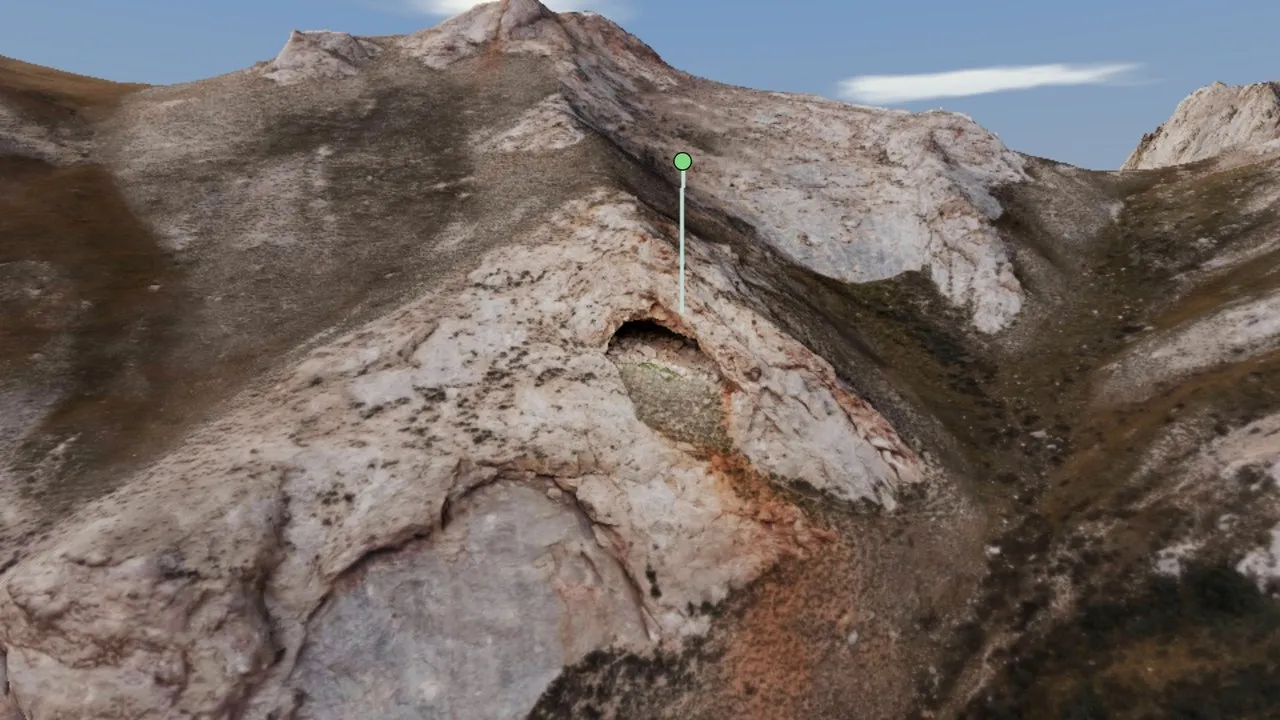
The same data now lives on in two forms. You can explore the terrain yourself in the interactive 3D maps of the survey area. And it is the first expedition on exped.earth, where an AI guide flies you through the valleys of Kok-Kiya and down to the openings the team found.
The capture-to-3D pipeline runs through Martin’s other recent work, most of it produced with IVAR Studios:
- Stonehenge (2021). A photogrammetry replica of the monument, built from more than 7,000 images for National Geographic Magazine and published as an augmented reality experience on National Geographic’s Instagram.
- Qikiqtaruk: Arctic at Risk (2024–). A WebXR experience built from years of drone and point-cloud data from an island in the Canadian Arctic, made with fellow National Geographic Explorers and shown at the World Economic Forum in Davos.
- Thingvellir for Apple Vision Pro. An immersive environment of the Icelandic national park, built by IVAR Studios with National Geographic and Disney.
- Avatar: The Last Airbender. 3D capture by IVAR Studios was used in the Emmy-nominated visual effects of the Netflix series, through VFX studio Important Looking Pirates.
Nordic Glaciers: an expedition with an AI guide
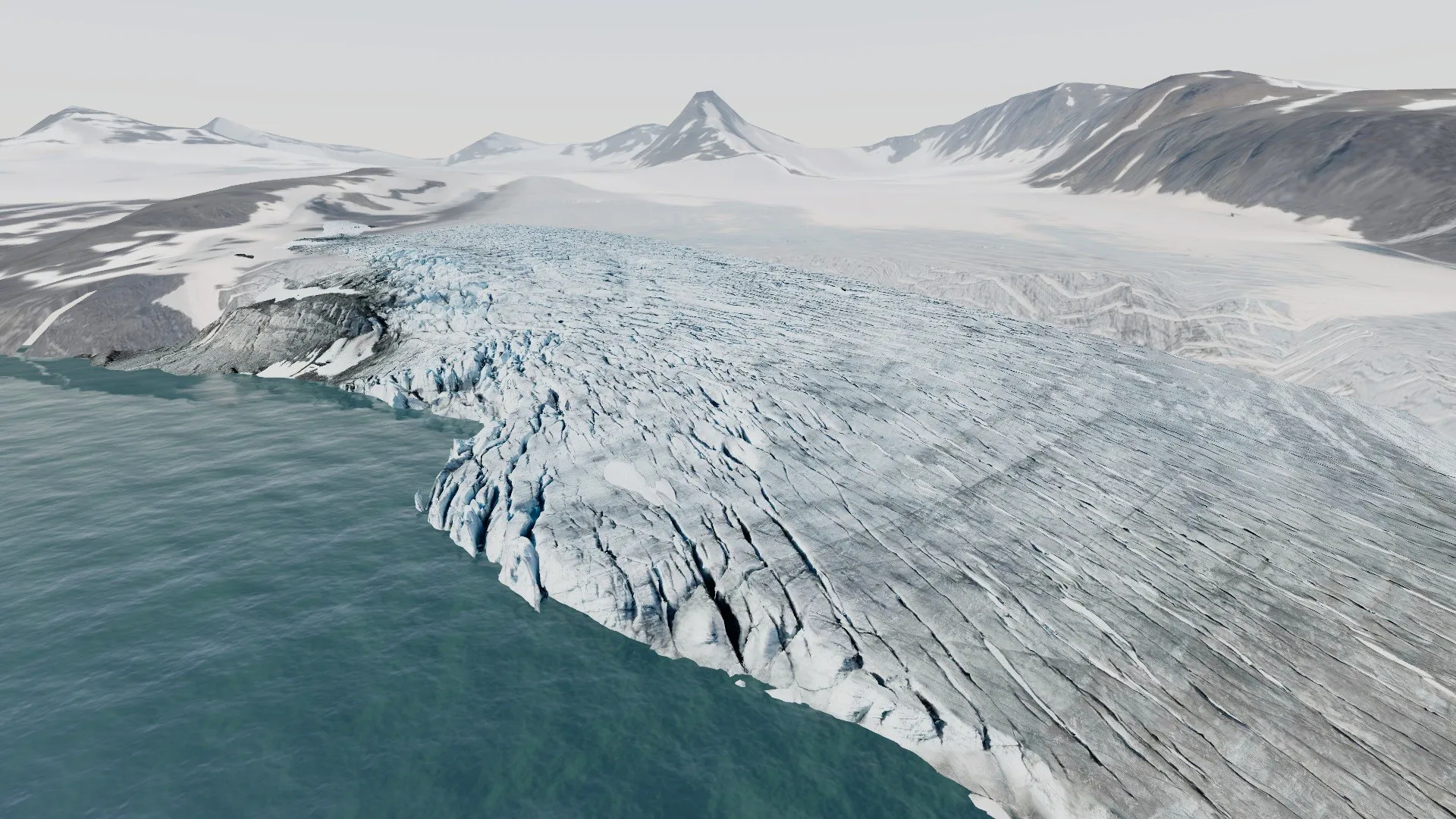
The second expedition on exped.earth goes to Sálajiegna in Swedish Lapland, one of Sweden’s largest glaciers. Its ice ends in a lake, at a calving front up to 38 metres high that no visitor can safely approach. The story is built on a 2022 field campaign by researchers from Stockholm University and KTH, who used a drone and an uncrewed survey boat to measure how the glacier loses ice. Their results were published in the Journal of Glaciology in 2024.
Your guide is SAL-01, an AI character embodied as a survey drone that flies alongside you. It narrates the campaign chapter by chapter, from morning to evening, and answers your questions by voice or text. When it explains where the glacier loses its mass, the ice lights up where it happens. Calving events are staged where the survey boat recorded them.
AI that cites its sources
The guide does not improvise. Each expedition’s research, from the published papers to the field notes, becomes a dataset of its own, and the AI answers only from that. Ask it where its information comes from, and it names the field campaign and the paper.
A few principles shape how Martin and IVAR Studios use AI in storytelling:
- Field material first. Generative models complement what is captured on location. They don’t replace it.
- Grounded answers. Factual content comes from vetted research, and the AI is not left to guess.
- Clearly non-human. The guides are drones and droids, never simulated people.
- Built for learning. Answers adapt to the age of the audience, and use in schools is led by teachers.
exped.earth runs in the browser and in VR, in English and Swedish. It is currently in invite-only beta, with two expeditions available and a third, from the Baltic Sea, in production. Read more about exped.earth on the IVAR Studios site.
field.tours: the engine underneath
exped.earth runs on field.tours, an engine IVAR Studios is building to stream high-resolution 3D scans in the browser and turn them into stories you can talk to. Semantic tagging tells the engine what everything in a scan is, so the AI can show you a feature while it talks about it. Scans that used to require a huge download open in seconds.
The same engine is now being offered to museums and heritage sites. Early tours include the Anundshög runestone in Västerås and Delsbogården at Skansen in Stockholm.
Work together
Museums, research groups, foundations and publishers with a place or a body of research that deserves a wider audience are welcome to get in touch. You can also read more about Martin or see the rest of his immersive work.