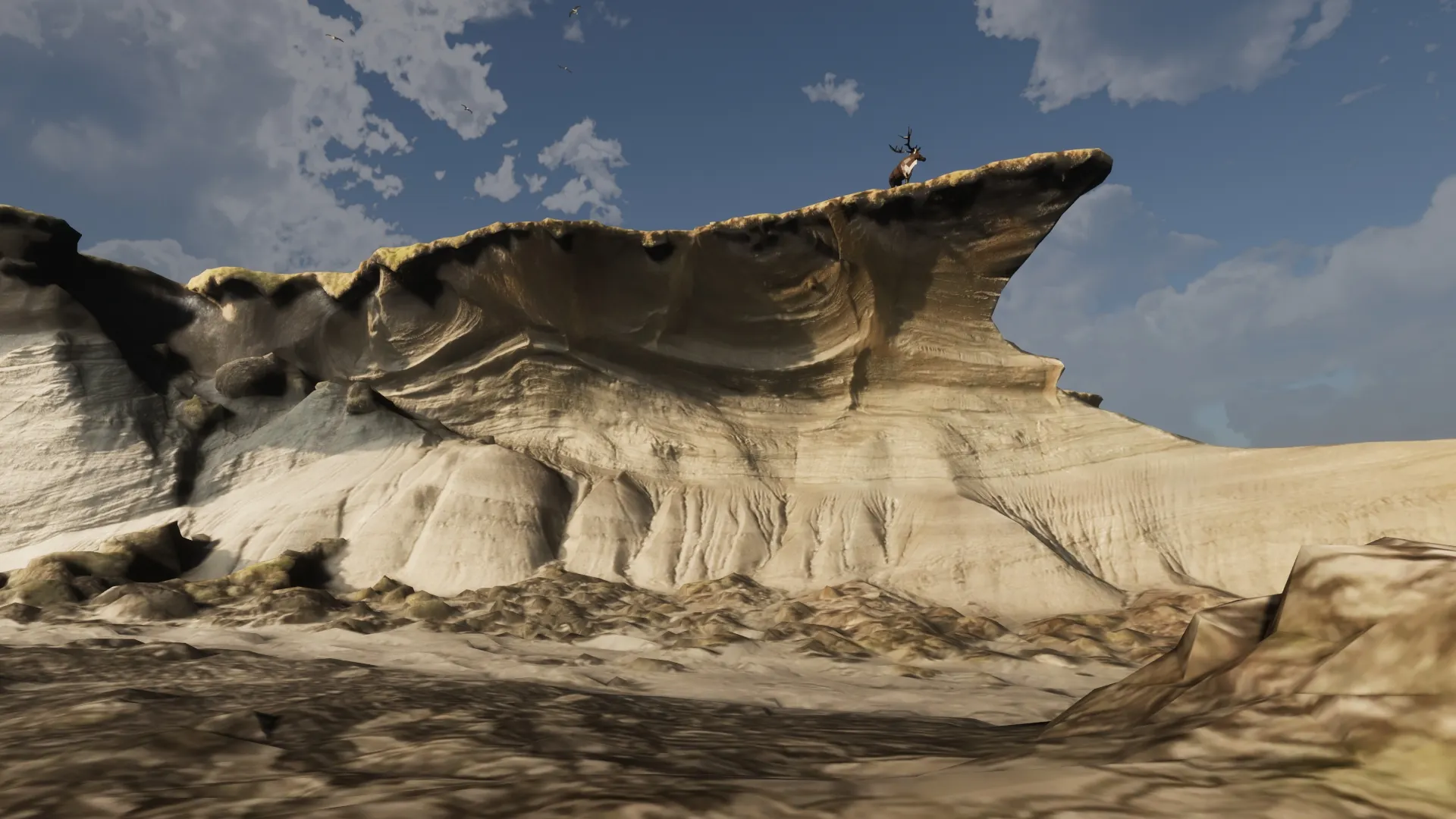
An immersive journey to the front lines of Arctic climate change
A WebXR experience that drops you onto Qikiqtaruk, a remote Arctic island where climate change is rewriting the landscape faster than almost anywhere on Earth.
In collaboration with fellow National Geographic Explorers Isla Myers-Smith and Jeff Kerby, Martin Edström directs the immersive storytelling layer of Qikiqtaruk: Arctic at Risk. Built by the IVAR Studios team alongside Team Shrub and the Inuvialuit community, the project brings together decades of Arctic science, indigenous knowledge and immersive technology into a single experience — built from real photogrammetry and field data captured on Qikiqtaruk (Herschel Island) itself.
A working prototype is already live and in use - showcased at the World Economic Forum in Davos 2024 and used in school programs across the Northwest Territories - with continued development through 2026 to deepen and expand the experience.
Qikiqtaruk and climate change
Qikiqtaruk is the only island along the Arctic coast of the Yukon, in the far Northwestern corner of Canada. The island has sustained the Inuvialuit, living off the land and sea, for countless generations and is of great cultural importance to the Inuvialuit People of the Western Canadian Arctic.
Over the centuries, Qikiqtaruk - also known as Herschel Island - has been a hub for explorers and whalers, and in 1987 was designated as a territorial park, a reserve established as a result of the Inuvialuit Final Agreement. The island is managed to conserve wildlife, support habitats and provide for traditional Indigenous use. Inuvialuit People, Yukon Parks and researchers work together to study and steward this place for the future.
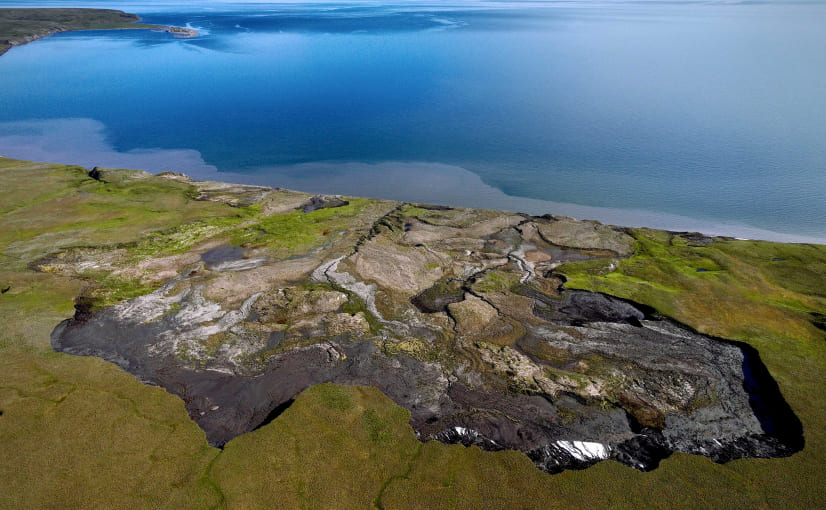
Amidst the backdrop of rapid Arctic warming and sea ice loss, decades of research on Qikiqtaruk by Team Shrub and a broader network of Arctic scientists has unveiled critical insights into the rates of tundra vegetation change, shifts in biodiversity and permafrost thaw. On Qikiqtaruk and across the Arctic, these changes are altering carbon cycling, wildlife dynamics and ultimately feeding back to influence the global climate.
“Qikiqtaruk is one of those places where the reality of climate change kicks in because you’re witnessing it for yourself.”
Richard Gordon, Senior Park Ranger, Yukon - Inuvialuit community member
From science to story
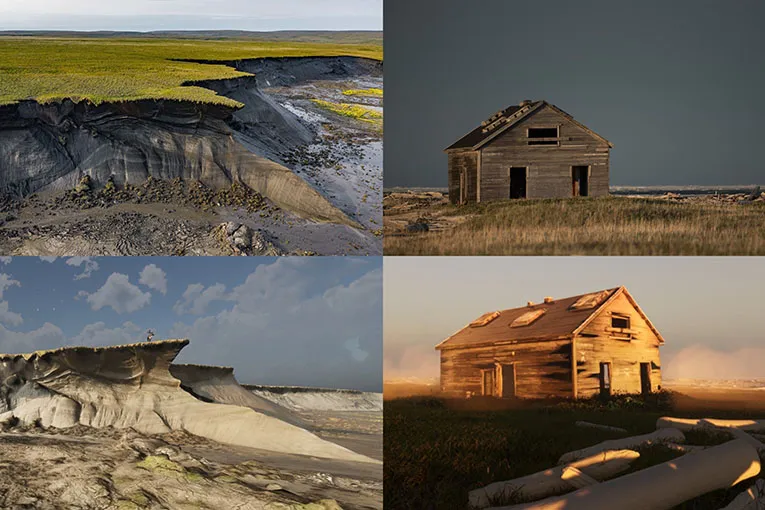
The raw material for this experience comes directly from scientific fieldwork - photogrammetry scans, drone surveys, and 3D point cloud data collected by researchers over years of studying Qikiqtaruk. Martin and the team at IVAR Studios have spent the project translating that scientific 3D data into immersive environments built for storytelling.
That means cleaning, optimizing and art-directing datasets that were never intended for public audiences - turning dense point clouds into atmospheric real-time landscapes, and layering in lighting, weather and spatial audio to create a sense of presence. The aim is an experience that is both scientifically grounded and emotionally compelling, where every environment the audience explores is rooted in real data from the island.
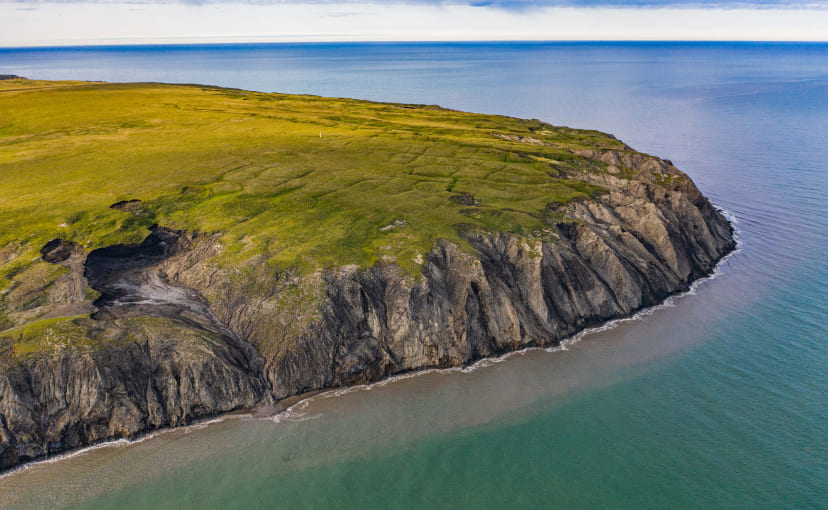
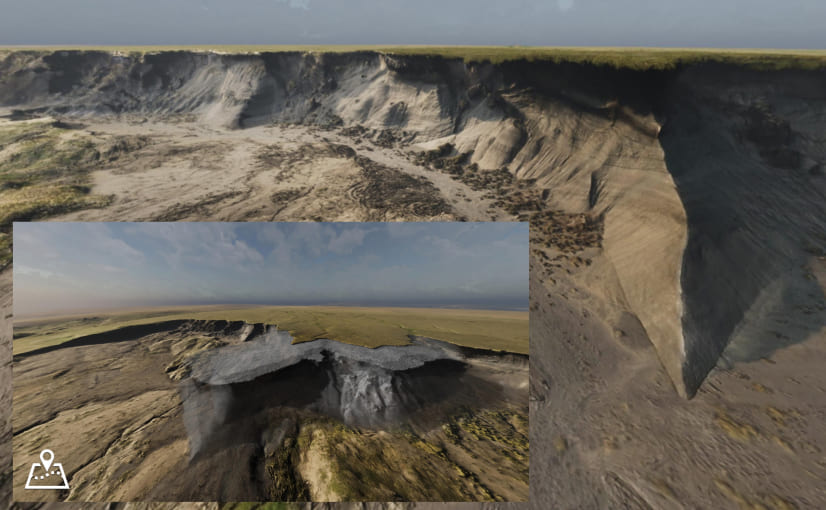
Real field photography from Qikiqtaruk and rendered environments built from the same scientific 3D data.
Experience the change
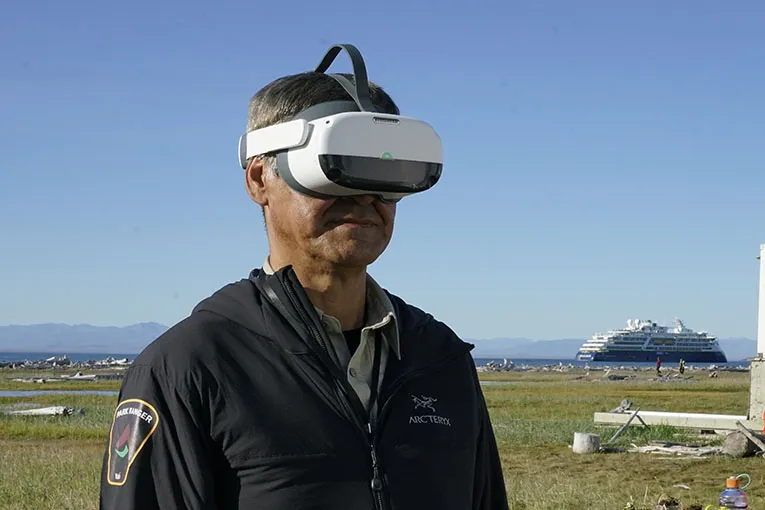
Built as a WebXR application, the experience runs directly in the browser and supports VR headsets for full immersion. Audiences are transported to Qikiqtaruk to witness tundra vegetation shifts, biodiversity changes, and coastal erosion driven by permafrost thaw - all rendered from real scientific data and field photography.
You don’t need anything more than a modern web browser to step into the story. If you have a VR headset, navigate to the same link in your headset’s browser to open the story as a WebXR experience in 3D.
Awards and recognition
The published prototype has already been recognised with the XR Prize 2023 and was a VR Awards finalist, and was showcased at the World Economic Forum in Davos in 2024. It is in active use in school programs across the Northwest Territories - including GeoWeek and Science Night events in Inuvik - making Arctic science accessible to audiences who will likely never set foot on the island themselves.
The team
Isla Myers-Smith - A global change ecologist at the University of British Columbia, Isla leads Team Shrub’s long-term Arctic research and has dedicated her career to studying climate change impacts on Arctic ecosystems.
Jeff Kerby - A geographer and visual storyteller at the University of Cambridge’s Scott Polar Research Institute, Jeff combines documentary photography with polar ecological research.
Martin Edström - Director and immersive storytelling lead at IVAR Studios, focused on connecting people to science through new formats.
Richard Gordon - Senior Park Ranger in the Yukon and member of the Inuvialuit community, bringing the cultural and traditional knowledge perspective that grounds the project’s scientific narrative in lived experience.
Kelly Kamo McHugh - Outreach coordinator at the Aurora Research Institute, connecting Arctic research with communities across the Northwest Territories - and bringing the VR experience into schools and public events.
IVAR Studios production team
Martin Edström, Director & Developer
Fredrik Edström, Producer
Carl-Fredrik Zell, 3D Artist
Jonathan Lövholm, Developer
Oliver Akermo, Sound Designer
Partners
Team Shrub - University of British Columbia
IVAR Studios
Meridian Treehouse
Aurora Research Institute
Scott Polar Research Institute, University of Cambridge
Digital Heritage Lab, University of Calgary
Arctic Research Center
This project was made possible thanks to a grant from the National Geographic Society.